Gurfinkel & Partners
Gurfinkel & Partners
Gurfinkel & Partners
From 5x to 11x ROAS, and $100K to $200K a Month
From 5x to 11x ROAS, and $100K to $200K a Month
From 5x to 11x ROAS, and $100K to $200K a Month
Live Website:
www.gurfinkelpartners.com
Role:
Role:
Brand Identity
Brand Identity
Brand Identity
,
,
Website
Website
Website
,
,

Gurfinkel & Partners structures access to hundreds of thousands in 0% interest capital for practices already doing seven figures. The product worked. The team was capable. What they could not do was reach the clients they wanted.
The diagnosis was a mismatch between the buyer and the read. Dan was going after medical practices and other high level professionals. Those people do not respond to a funding pitch. They respond to a firm that looks like a peer. The firm was running a loud funding ad look under the name Lucky Credit, which belonged to a category it had outgrown. In Dan's words, they were not yet dressed for that room. A business that sells trust cannot win it looking like a lead generator.
The point matters more than it sounds. A practice owner doing seven figures is not comparing rates when they land on your site. They are deciding whether you are the kind of firm that will treat them as a client or as a lead. That decision happens before anyone picks up the phone, and it decides what happens on the call.
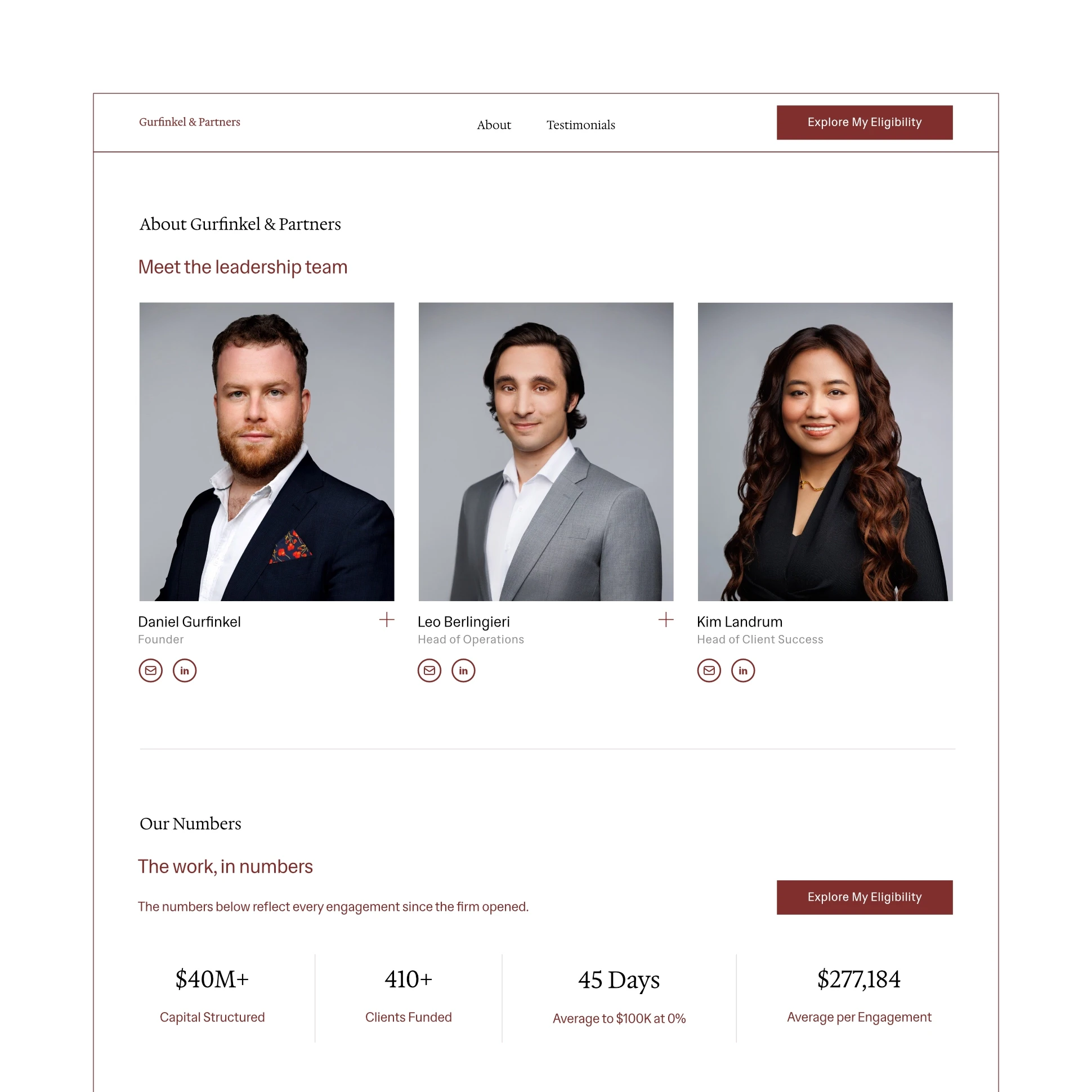
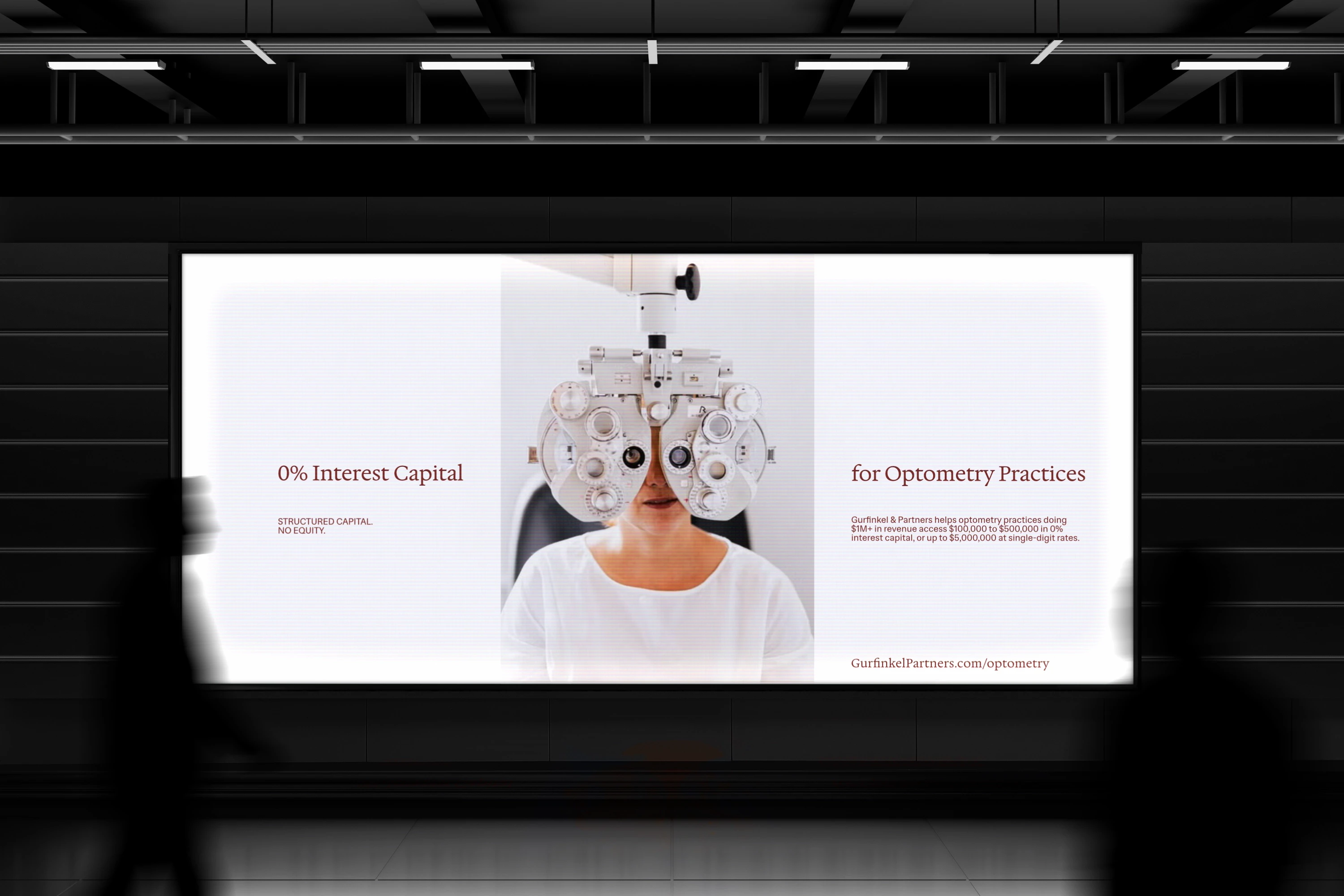
So the position was set against the people the firm serves rather than the category it competes in. Every build decision after that followed from it. The headline states the offer plainly, 0% interest capital for medical practices, because a specialist names their buyer and a generalist cannot. The page takes a skeptical reader from doubt to the next step with no inflated claims, because inflated claims are the exact signal this buyer is screening for. The search groundwork underneath means the firm is found as credibly as it reads, since the first thing a cautious buyer does is look you up.
How it works together, in sequence. Ads bring in a medical practice owner. Before booking, they search the firm and find a site that reads like a specialist rather than an aggregator. They arrive at the call already believing this is a real firm. On the call, the team runs the site as a sales deck, walking through testimonials, and sends it ahead of meetings so the same read reaches everyone else in the decision.
That sequence is what changed the economics. Leo Berlingieri, their COO, was careful about attribution when he shared the numbers, and he was right to be. Several things moved in that period: targeting toward higher intent medical practice leads, the sales process, new creative, the brand, and the site. Asked what the brand work specifically did, his answer was that skepticism objections on calls went down once the firm looked professional, and that let them close more.
That is the whole mechanism. Fewer calls spent overcoming doubt, more calls spent on the deal. Return on ad spend went from 5x to a rolling 11x. Monthly revenue moved from roughly $100K to $200K. And the clients, in his words, are ones they enjoy working with.
What the brand work did was make the firm legible to the buyer they were going after. What it did not do is act alone. The other four changes needed something coherent to plug into, and the position is what gave them that.
Gurfinkel & Partners structures access to hundreds of thousands in 0% interest capital for practices already doing seven figures. The product worked. The team was capable. What they could not do was reach the clients they wanted.
The diagnosis was a mismatch between the buyer and the read. Dan was going after medical practices and other high level professionals. Those people do not respond to a funding pitch. They respond to a firm that looks like a peer. The firm was running a loud funding ad look under the name Lucky Credit, which belonged to a category it had outgrown. In Dan's words, they were not yet dressed for that room. A business that sells trust cannot win it looking like a lead generator.
The point matters more than it sounds. A practice owner doing seven figures is not comparing rates when they land on your site. They are deciding whether you are the kind of firm that will treat them as a client or as a lead. That decision happens before anyone picks up the phone, and it decides what happens on the call.
So the position was set against the people the firm serves rather than the category it competes in. Every build decision after that followed from it. The headline states the offer plainly, 0% interest capital for medical practices, because a specialist names their buyer and a generalist cannot. The page takes a skeptical reader from doubt to the next step with no inflated claims, because inflated claims are the exact signal this buyer is screening for. The search groundwork underneath means the firm is found as credibly as it reads, since the first thing a cautious buyer does is look you up.
How it works together, in sequence. Ads bring in a medical practice owner. Before booking, they search the firm and find a site that reads like a specialist rather than an aggregator. They arrive at the call already believing this is a real firm. On the call, the team runs the site as a sales deck, walking through testimonials, and sends it ahead of meetings so the same read reaches everyone else in the decision.
That sequence is what changed the economics. Leo Berlingieri, their COO, was careful about attribution when he shared the numbers, and he was right to be. Several things moved in that period: targeting toward higher intent medical practice leads, the sales process, new creative, the brand, and the site. Asked what the brand work specifically did, his answer was that skepticism objections on calls went down once the firm looked professional, and that let them close more.
That is the whole mechanism. Fewer calls spent overcoming doubt, more calls spent on the deal. Return on ad spend went from 5x to a rolling 11x. Monthly revenue moved from roughly $100K to $200K. And the clients, in his words, are ones they enjoy working with.
What the brand work did was make the firm legible to the buyer they were going after. What it did not do is act alone. The other four changes needed something coherent to plug into, and the position is what gave them that.


"
"
The website is good because people look us up before the call and it looks very professional. Dan uses it on sales calls as a deck to talk through testimonials. The branding is helping build trust, which is what Lucky Credit wasn't doing.
The website is good because people look us up before the call and it looks very professional. Dan uses it on sales calls as a deck to talk through testimonials. The branding is helping build trust, which is what Lucky Credit wasn't doing.
Leo Berlingieri, COO
Leo Berlingieri, COO
Leo Berlingieri, COO
"
"